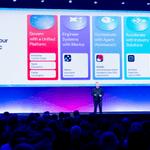
At the Dublin Tech Summit 2026, tech evangelist David Savage spent time moderating discussions on talent, skills, and the future of technology across Ireland and beyond. What stood out most was the confidence with which people spoke about Ireland's future, not just as a home for global tech companies, but as a destination for innovation, investment, and talent in its own right.
In this piece, David reflects on a conversation that caught his attention during the summit and explores a bigger question that emerged from his time in Dublin. As Ireland's tech sector continues to grow and AI adoption accelerates, is the country becoming one of Europe's most compelling technology success stories?
Ireland claims to be Europe’s Silicon Valley, but does it have the talent to back that up?
Last week, I was asked to moderate a talk at Dublin Tech Summit exploring how Ireland builds a competitive talent pool. Whilst on a panellist had a little, playful dig at me. Not personally, but in my status as a British person.
"Let's not forget that we are the only English-speaking EU member."
Personally, I always felt Brexit would diminish Britain’s economy and standing internationally. However, London in particular is such a strong hub that the technology sector felt somewhat insulated. But the teasing comment shows the growing confidence across the Irish Sea that they are uniquely placed to compete in the technology space.
Right across the panel, there was a belief that they could offer opportunities to talented tech professionals to help fuel the country’s growth. But is there evidence to suggest that confidence isn’t misplaced?
Certainly, sitting in the same timezone as London is a business advantage. According to Investor Monitor (between mid 2016 and early 2021), Dublin welcomed 135 new financial companies, a quarter of all Brexit-related corporate relocations. That’s more than Paris, Luxembourg, Frankfurt, and Amsterdam, with firms like Bank of America, Citi, and JPMorgan all moving into town. As of April this year, Ireland now hosts 5178 tech companies and 2200 startups, contributing approximately €48 billion to the economy.
Clearly, this is some way short of the UK tech sector’s size and contribution, but the number of new UK tech incorporations has tumbled in recent years. I’m not suggesting Dublin will supplant London (still Europe’s unicorn leader and a genuine global city) any time soon, but it is an increasingly attractive destination for tech talent.
Ireland Feels Like a Country-Sized Sandbox
Ireland is a world-leading hub for AI adoption and the European home for giants like Google and Microsoft. In fact nucamp.co point to the fact that there are many opportunities for senior specialists in AI and cloud roles, salaries are highly competitive (senior AI professionals earn over €140,000), and regions like Cork offer a wonderful quality of life that’s hard to match elsewhere.
The point about Ireland being a world-leader for AI adoption cannot be overlooked either. It’s estimated that 70% of Irish workers use AI regularly, higher percentages than we find in either the UK or the US.
Ireland offers businesses the room to grow and provides flexibility within the EU, whilst remaining close to London. The UK often talks about our place as a “Goldilocks Zone”, taking the best of governance, talent, and investment to help grow our AI capacity. Is that ‘zone’ really found in our neighbours in the North Atlantic?
Whilst the jibe about language and the EU was playful, there are several indicators to suggest that Ireland has every reason to feel bullish about its ability to compete in technology.